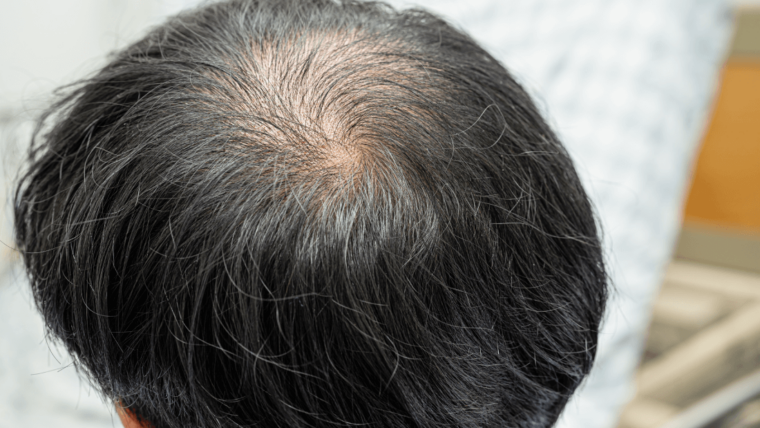

August marks Hair Loss Awareness Month, a critical time to educate, destigmatize, and empower individuals facing one of dermatology’s most emotionally impactful conditions. As a board-certified dermatologist specializing in hair disorders, I witness daily how hair loss affects not just appearance, but confidence, relationships, and overall quality of life. The American Academy of Dermatology estimates that approximately 80 million men and women in the United States experience hereditary hair loss alone, with countless others affected by other forms of alopecia¹. This month, let’s explore the science behind hair loss, evidence-based prevention strategies, and the most advanced treatment options available today.
Understanding the Hair Growth Cycle
Before exploring hair loss conditions and treatments, it’s essential to understand how healthy hair grows. Each hair follicle cycles through four distinct phases:
Anagen (Growth Phase): The active growth phase lasting 2-7 years, during which hair grows approximately 6 inches per year. At any given time, approximately 85-90% of scalp hairs are in this phase².
Catagen (Transition Phase): A brief transitional phase lasting 2-3 weeks, during which the hair follicle shrinks and detaches from its blood supply.
Telogen (Resting Phase): A resting phase lasting approximately 3 months, during which the hair remains in the follicle but does not grow. Approximately 10-15% of hairs are in this phase at any time.
Exogen (Shedding Phase): The final phase during which the old hair sheds and the follicle begins a new anagen phase. Normal daily shedding ranges from 50 to 100 hairs.
Disruptions to this cycle, caused by genetics, hormones, stress, nutrition, or disease, can lead to various forms of hair loss. Understanding which phase is affected helps guide diagnosis and treatment.
Common Types of Hair Loss
Androgenetic Alopecia (Genetic Hair Loss)
The most common form of hair loss, androgenetic alopecia, affects approximately 50% of men by age 50 and up to 40% of women by age 70³. This hereditary condition is linked to the hormone dihydrotestosterone (DHT), which causes hair follicles to miniaturize progressively over time.
In men, it typically presents with a receding hairline and thinning at the crown, according to the Norwood-Hamilton classification.
In women, it usually manifests as diffuse thinning over the top of the scalp, with preservation of the frontal hairline, according to the Ludwig classification.
Treatment Approaches:
- Topical minoxidil (FDA-approved for both men and women)
- Oral finasteride or dutasteride (5-alpha reductase inhibitors)
- Spironolactone for women with hormonal influences
- Platelet-rich plasma (PRP) therapy
- Low-level laser therapy
- Hair transplantation for advanced cases
Telogen Effluvium (Stress-Related Shedding)
Telogen effluvium is a reactive form of hair loss triggered by physical or emotional stressors that push hair follicles prematurely into the telogen (resting) phase. Common triggers include surgery, childbirth, severe illness, extreme weight loss, nutritional deficiencies, and significant emotional stress⁴.
The condition typically manifests 2-3 months after the triggering event, causing diffuse shedding across the entire scalp. While alarming, telogen effluvium is usually temporary, with hair regrowth occurring once the underlying cause is addressed.
August 24th – National Relaxation Day serves as an important reminder of the profound connection between stress and hair health. Chronic stress maintains elevated cortisol levels that can perpetuate telogen effluvium and worsen other forms of hair loss. Incorporating stress management techniques, including meditation, regular exercise, adequate sleep, and mindfulness practices, can have measurable benefits for hair health.
Alopecia Areata (Autoimmune Hair Loss)
Alopecia areata is an autoimmune condition in which the immune system mistakenly attacks hair follicles, causing sudden, patchy hair loss. The National Alopecia Areata Foundation estimates that approximately 6.8 million Americans are affected, with a lifetime risk of about 2%⁵.
The condition can progress to alopecia totalis (complete scalp hair loss) or alopecia universalis (complete body hair loss) in some cases. Recent advances in treatment, particularly JAK inhibitors, have revolutionized management options for severe cases.
Treatment Options:
- Topical, intralesional, and systemic corticosteroids
- Topical immunotherapy
- JAK inhibitors (baricitinib, FDA-approved for severe alopecia areata in 2022)
- Minoxidil as adjunctive therapy
Traction Alopecia
Traction alopecia results from repeated tension on hair follicles caused by tight hairstyles, including braids, ponytails, extensions, and weaves. This condition is particularly prevalent among women who regularly wear protective styles without adequate breaks⁶.
Early recognition is crucial, as prolonged tension can lead to permanent follicle damage and irreversible hair loss. Treatment involves eliminating the source of tension, anti-inflammatory treatments, and, in some cases, PRP therapy to stimulate follicle recovery.
Scarring Alopecia (Cicatricial Alopecia)
Scarring alopecia is a group of rare disorders that cause permanent destruction of hair follicles and their replacement with scar tissue. Types include:
- Lichen Planopilaris (LPP): Autoimmune inflammation destroying follicles
- Central Centrifugal Cicatricial Alopecia (CCCA): Most common scarring alopecia in women of African descent
- Discoid Lupus Erythematosus (DLE): Autoimmune condition causing scarring hair loss
- Frontal Fibrosing Alopecia (FFA): Progressive hairline recession primarily affecting postmenopausal women
Early detection and treatment are essential to halt progression, as follicle destruction in scarring alopecias is irreversible.
The Science of Hair Follicle Stimulation and Regeneration
Understanding how to stimulate hair follicles and promote regeneration is central to modern hair loss treatment. Several biological mechanisms are involved in follicle health and hair growth:
Growth Factors and Follicle Stimulation
Hair follicle activity is regulated by numerous growth factors, including platelet-derived growth factor (PDGF), vascular endothelial growth factor (VEGF), insulin-like growth factor (IGF-1), and keratinocyte growth factor (KGF). These signaling molecules promote follicle activity, extend the anagen phase, and support follicle survival⁷.
Modern hair restoration treatments leverage these growth factors to stimulate dormant follicles and promote new hair growth. Treatments that increase local concentrations of these growth factors can significantly improve hair density and thickness.
Scalp Circulation and Hair Health
Adequate blood flow to the scalp is essential for delivering nutrients and oxygen to hair follicles. Research demonstrates a direct correlation between scalp circulation and hair density, with improved blood flow associated with enhanced follicle activity and hair growth⁸.
Factors that compromise scalp circulation include chronic stress, poor nutrition, smoking, and certain medical conditions. Treatments that improve scalp microcirculation can have significant positive effects on hair growth and follicle health.
The Role of Inflammation
Chronic low-grade inflammation around hair follicles is increasingly recognized as a contributing factor in multiple forms of hair loss, including androgenetic alopecia. Research published in the Journal of Investigative Dermatology demonstrates that perifollicular inflammation can accelerate follicle miniaturization and hair loss progression⁹. Anti-inflammatory treatments targeting this inflammation represent an important component of comprehensive hair loss management.
Advanced Treatment Options: PDGF Therapy
Platelet-Derived Growth Factor (PDGF) therapy represents one of the most exciting advances in hair restoration medicine. This treatment harnesses the body’s own growth factors to stimulate hair follicle regeneration and promote new hair growth.
Mechanism of Action:
PDGF therapy works by delivering concentrated growth factors directly to the scalp, where they:
- Stimulate dormant hair follicles to enter the active growth phase
- Promote hair follicle regeneration and new follicle development
- Improve scalp circulation by stimulating new blood vessel formation
- Reduce perifollicular inflammation that contributes to hair loss
- Enhance the penetration and effectiveness of topical hair treatments
Clinical Benefits:
Research demonstrates that PDGF therapy can significantly improve hair density, thickness, and overall scalp health. Patients typically notice:
- Reduced hair shedding within the first few weeks
- Improved hair thickness and texture
- Increased hair density over 3-6 months
- Enhanced scalp health and reduced inflammation
- Strengthening of existing hair shafts
Treatment Protocol:
Optimal results are achieved through a series of treatments, typically spaced 4-6 weeks apart. A series of three treatments allows for progressive stimulation of hair follicles and cumulative improvement in hair density and scalp health¹⁰.
Ideal Candidates:
PDGF therapy is particularly beneficial for patients experiencing:
- Early to moderate androgenetic alopecia
- Telogen effluvium and stress-related hair loss
- General hair thinning and reduced density
- Scalp conditions affecting hair growth
- Those seeking to enhance the effectiveness of other hair loss treatments
Comprehensive Diagnosis: The Foundation of Effective Treatment
Effective hair loss treatment begins with an accurate diagnosis. At Hair and Skin Science Center, our comprehensive evaluation includes:
Detailed Medical History: Review of family history, medications, recent stressors, hormonal changes, and nutritional status.
Scalp Examination: Visual assessment of hair distribution, density, and scalp condition.
Trichoscopy: Advanced scalp imaging that allows examination of hair follicles and scalp at high magnification, providing crucial diagnostic information without biopsy.
Hair Pull Test: Assessment of active hair shedding by gently pulling small groups of hairs.
Blood Work: Evaluation of thyroid function, iron levels, vitamin D, zinc, and hormonal panels when indicated.
Scalp Biopsy: Microscopic examination of scalp tissue for definitive diagnosis of scarring alopecias and other complex conditions.
Nutritional Support for Hair Health
Nutritional deficiencies are a frequently overlooked contributor to hair loss. Research identifies several key nutrients essential for healthy hair growth:
Iron: Iron deficiency is one of the most common nutritional causes of hair loss, particularly in women. Studies show that maintaining adequate ferritin levels is essential for normal hair growth¹¹.
Vitamin D: Research published in the Journal of the American Academy of Dermatology demonstrates a significant association between vitamin D deficiency and alopecia areata and other forms of hair loss¹².
Zinc: Essential for hair tissue growth and repair, zinc deficiency can cause hair loss and scalp changes. However, excessive zinc supplementation can also cause hair loss, making professional guidance essential.
Biotin: While biotin deficiency is rare, supplementation may benefit individuals with documented deficiency. The evidence for biotin supplementation in the absence of deficiency is limited.
Protein: Hair is primarily composed of keratin protein, making adequate dietary protein essential for hair growth and strength.
The Stress-Hair Loss Connection: National Relaxation Day
August 24th marks National Relaxation Day, providing an important opportunity to address the profound connection between stress and hair health. Chronic stress activates the hypothalamic-pituitary-adrenal (HPA) axis, leading to elevated cortisol levels that can disrupt the hair growth cycle, trigger telogen effluvium, and worsen existing hair loss conditions¹³.
Stress Management Strategies for Hair Health:
- Regular aerobic exercise (improves scalp circulation and reduces cortisol)
- Mindfulness meditation and deep breathing exercises
- Adequate sleep (7-9 hours nightly for optimal hair follicle repair)
- Yoga and other mind-body practices
- Professional counseling when stress is severe or persistent
Research published in Nature demonstrates that chronic stress can actually deplete hair follicle stem cells, potentially causing permanent changes in follicle activity¹⁴. This finding underscores the importance of stress management as a genuine medical intervention for hair health, not merely a lifestyle recommendation.
When to Seek Professional Help
Early intervention is always more effective than treating advanced hair loss. Seek professional evaluation if you notice:
- Sudden or patchy hair loss
- Significant increase in daily shedding
- Progressive thinning that worsens over time
- Changes in scalp condition (itching, scaling, redness, or tenderness)
- Hair loss accompanied by other symptoms (fatigue, weight changes, hormonal symptoms)
- Hair loss is causing significant emotional distress
Conclusion: Hope and Help for Hair Loss
Hair Loss Awareness Month reminds us that hair loss is a medical condition deserving of professional attention, evidence-based treatment, and compassionate care. While hair loss can feel overwhelming and isolating, most forms are treatable, and many are reversible with early intervention and appropriate treatment.
The field of hair restoration continues to advance rapidly, with exciting developments in growth factor therapies, JAK inhibitors, and regenerative medicine offering new hope for patients with previously difficult-to-treat conditions. At Hair and Skin Science Center, we remain committed to providing the most current, evidence-based hair loss treatments in a compassionate, patient-centered environment.
If you’re experiencing hair loss, don’t wait. Early diagnosis and treatment consistently produce the best outcomes. Schedule a comprehensive hair loss evaluation today and take the first step toward restoring your hair and confidence.
Sources:
- American Academy of Dermatology. “Hair loss: Who gets and causes.” Available at: https://www.aad.org/public/diseases/hair-loss/causes/18-causes
- Buffoli, B., et al. “The human hair: from anatomy to physiology.” International Journal of Dermatology, 2014.
- Vary, J. C. “Selected disorders of skin appendages—acne, alopecia, hyperhidrosis.” Medical Clinics of North America, 2015.
- Grover, C., & Khurana, A. “Telogen effluvium.” Indian Journal of Dermatology, Venereology and Leprology, 2013.
- National Alopecia Areata Foundation. “About Alopecia Areata.” Available at: https://www.naaf.org/alopecia-areata/
- Khumalo, N. P., et al. “Traction alopecia: the root of the problem.” Clinical, Cosmetic and Investigational Dermatology, 2014.
- Trink, A., et al. “A randomized, double-blind, placebo- and active-controlled, half-head study to evaluate the effects of platelet-rich plasma on alopecia areata.” British Journal of Dermatology, 2013.
- Starace, M., et al. “Scalp microneedling: a review of the evidence.” Journal of Cosmetic Dermatology, 2020.
- Mahé, Y. F., et al. “Androgenetic alopecia and microinflammation.” International Journal of Dermatology, 2000.
- Dhurat, R., & Sukesh, M. “Principles and methods of preparation of platelet-rich plasma.” Journal of Cutaneous and Aesthetic Surgery, 2014.
- Trost, L. B., et al. “The diagnosis and treatment of iron deficiency and its potential relationship to hair loss.” Journal of the American Academy of Dermatology, 2006.
- Rasheed, H., et al. “Serum ferritin and vitamin D in female hair loss: do they play a role?” Skin Pharmacology and Physiology, 2013.
- Peters, E. M., et al. “Stress and the hair follicle: exploring the connections.” American Journal of Pathology, 2006.
- Choi, S., et al. “Corticosterone inhibits GAS6 to govern hair follicle stem-cell quiescence.” Nature, 2021.