
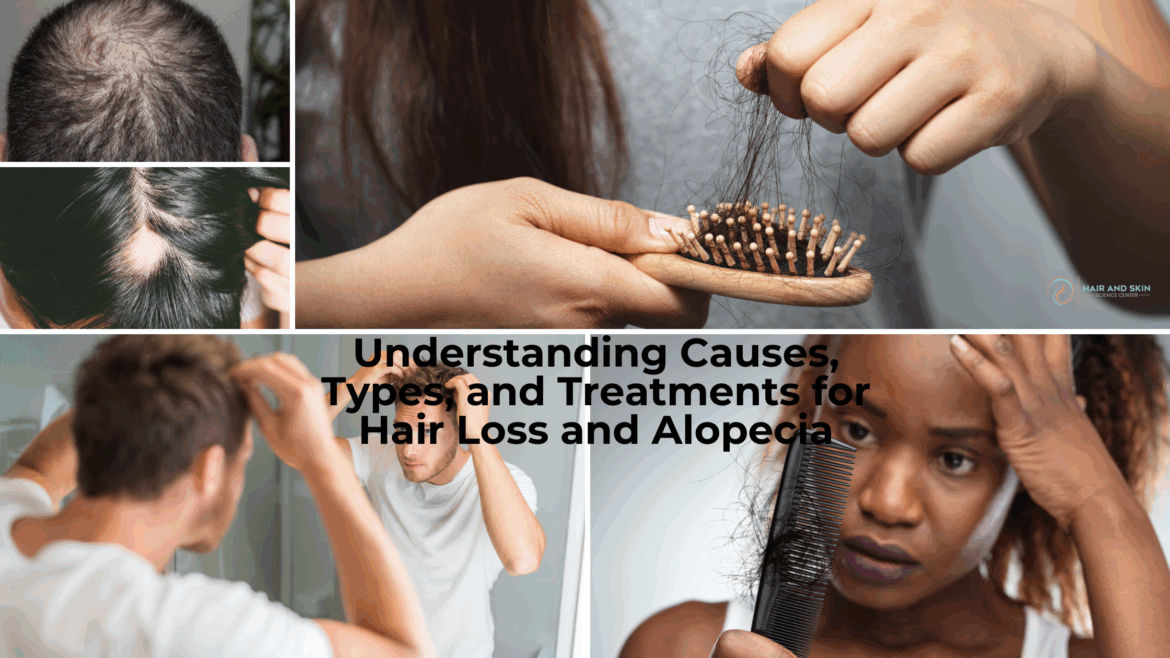
As a board-certified dermatologist, I witness firsthand the profound impact of hair loss and alopecia on a person’s confidence and overall quality of life. The good news? Many types of hair loss are manageable and, in some cases, reversible with early diagnosis and a personalized treatment plan.
In this blog, I’ll walk you through the different types of hair loss, common causes, and evidence-based treatments we use at Hair and Skin Science Center in Houston.
Common Types of Hair Loss
Hair loss can be temporary or permanent, and it can be localized or widespread. Identifying the cause is the first step to effective treatment.
1. Androgenetic Alopecia (Genetic Hair Loss)
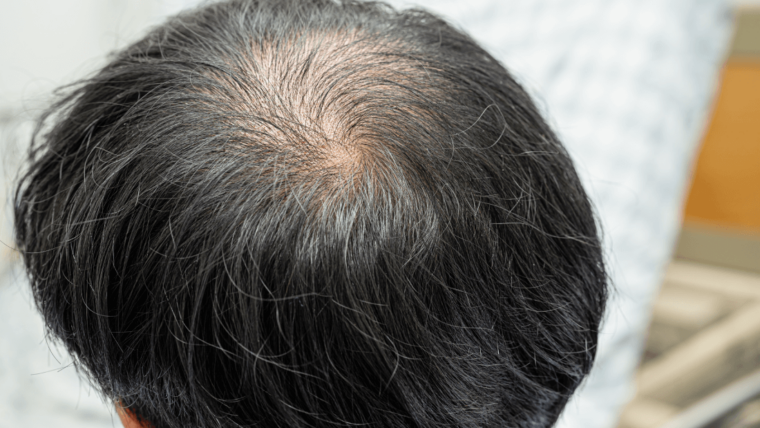
Also known as male or female pattern hair loss, this is the most common form of hair loss.
- In men, it often begins with a receding hairline or thinning at the crown.
- In women, it usually appears as diffuse thinning over the top of the scalp.
This condition is hereditary and linked to hormonal changes involving dihydrotestosterone (DHT). Early intervention with treatments such as minoxidil and 5 alpha reductase inhibitors such as dutasteride, finasteride and PRP (platelet-rich plasma) therapy and when indicated, hair transplantation.
Source: American Academy of Dermatology Association (AAD)
2. Telogen Effluvium (Stress-Related Shedding)
Telogen effluvium is often triggered by a physical or emotional stressor, such as surgery, childbirth, illness, or extreme weight loss. It results in diffuse hair shedding and typically occurs two to three months after the stressor.
Fortunately, this condition is usually temporary, and hair regrows once the underlying cause is addressed.
3. Alopecia Areata (Autoimmune Hair Loss)
Alopecia areata is an autoimmune disease in which the immune system mistakenly attacks the hair follicles, resulting in sudden, round patches of hair loss on the scalp or body.
It can progress to alopecia totalis (loss of all scalp hair) or alopecia universalis (loss of all body hair).
Treatments include topical corticosteroids, injectable steroids, and newer JAK inhibitors for more severe or resistant cases.
Source: National Alopecia Areata Foundation (NAAF)
4. Traction Alopecia
This type of hair loss occurs due to repeated tension on the scalp, typically caused by tight hairstyles such as braids, ponytails, or extensions.
It’s especially common in people who even though wearing protective styles, wear them repeatedly without breaks. Left untreated, it can lead to permanent follicle damage.
Treatment involves eliminating tension, encouraging regrowth with anti-inflammatory and growth promoting medications and in some circumstances using platelet-rich plasma (PRP) therapy to stimulate follicles. In some instances, medications can be tailored or compounded into topical formulations to best treat each individual scenario.
5. Scarring Alopecia (Cicatricial Alopecia)
This rare group of disorders leads to permanent destruction of hair follicles and replacement with scar tissue. Causes include:
- Lichen planopilaris
- Discoid lupus erythematosus (DLE)
- Central centrifugal cicatricial alopecia (CCCA)
Early detection is crucial. We use a combination of scalp examination and biopsies for diagnosis.
Source: Journal of the American Academy of Dermatology (JAAD)
How We Diagnose Hair Loss
At Hair and Skin Science Center, we begin with a detailed evaluation that includes:
- Medical history and symptom review
- Scalp examination
- Hair pull test
- Trichoscopy (scalp imaging)
- Blood work (when needed)
- Scalp biopsy (for scarring or unclear cases)
- Accurate diagnosis is the foundation of effective care.
Treatment Options
Depending on the type of hair loss and its severity, we may recommend:
✅ Topical Treatments
- Minoxidil (Rogaine): FDA-approved and available over the counter
- Steroid creams or foams: For autoimmune and inflammatory conditions
✅ Oral Medications
- Dutasteride and Finasteride
- Spironolactone (for women with hormonal imbalance)
- Oral corticosteroids or JAK inhibitors for autoimmune-related hair loss
✅ In-Office Procedures
- PRP (Platelet-Rich Plasma) Therapy: Stimulates hair follicles using your body’s own growth factors
- Microneedling with serums for scalp rejuvenation
✅ Lifestyle & Nutritional Support
- Evaluating for the deficiencies and abnormalities that are more pertinent to hair loss including thyroid abnormalities , iron, vitamin D and zinc.
- Counseling on stress management and healthy scalp care, certified therapists and highly trained hairstylists can be an essential part of providing that care.
Important Note About Treatment Customization:
The distinction between “topical” and “oral” medications in hair loss treatment is often less clear-cut than it may appear. At Hair and Skin Science Center, we work closely with specialized compounding pharmacies to create personalized topical formulations WHEN POSSIBLe using medications that are traditionally available in oral form. This approach allows us to deliver targeted treatment directly to the scalp while potentially minimizing systemic side effects.
Depending on the specific type of hair loss and individual patient needs, we may incorporate various medications into custom topical preparations, including finasteride, latanoprost, metformin, among many others. This compounding process enables us to tailor concentrations and combinations specifically for each patient’s unique condition and treatment goals.
The treatment options listed above represent broad categories, and the specific medications, formulations, and delivery methods will always be determined based on your individual diagnosis, medical history, and treatment response. During your consultation, Dr. Maloney will discuss which approach, whether traditional oral medications, compounded topical treatments, or combination therapies, is most appropriate for your specific type of hair loss.
All treatment recommendations are made following comprehensive evaluation and are based on current evidence-based practices in dermatology and hair restoration medicine.
When to See a Dermatologist If you notice:
- Sudden or patchy hair loss
- Tenderness
- Significant shedding
- Changes in scalp condition (itching, flaking, redness)
- Hair thinning that worsens over time
…it’s time to consult a board-certified dermatologist.
Final Thoughts from Dr. Maloney
Hair loss can feel overwhelming, but it doesn’t have to be permanent or untreatable. As a medical dermatologist, I’m here to guide you through every step, from diagnosis to treatment, with evidence-based care that gets results.
Your hair health is part of your overall well-being, and we’re here to help you feel confident again.
Schedule a consultation today at Houston Hair and Skin Science Center and take the first step toward restoring your hair and confidence.
Sources:
American Academy of Dermatology: aad.org
National Alopecia Areata Foundation: naaf.org
Journal of the American Academy of Dermatology: jaad.org